August is the ideal month for Louisville homeowners to inspect their gutters because late summer heat, storm activity, and debris buildup create hidden damage before fall leaves and winter ice make repairs harder and more expensive. Catching problems now—before the heavy season—can prevent costly water damage and structural issues.
Louisville summers don’t go quietly. By the time August rolls around, your gutters have spent months dealing with intense heat, UV exposure, and the kind of heavy thunderstorms that the Ohio Valley is known for. Most homeowners don’t think about their gutters until leaves start piling up in October—but by then, the damage from summer is already done.
Here’s the problem with waiting: fall brings a rapid buildup of debris, and winter follows fast with freezing temperatures that turn small gutter issues into expensive structural problems. August sits right at the sweet spot. The leaves haven’t fallen yet, access is easy, and any damage found now can be repaired before conditions make every job harder and costlier.
This guide covers exactly what to look for, when to repair versus replace, and how Eclipse Roofing & Restoration can help Louisville homeowners get ahead of the season.
Why Does Late Summer Take Such a Toll on Louisville Gutters?
Louisville’s climate isn’t gentle. Summers bring sustained heat that causes metal gutters to expand and contract repeatedly, stressing joints and sealants over time. UV rays degrade caulking and painted surfaces. Then come the storms.
The Louisville area regularly sees intense summer thunderstorms with high winds and heavy, fast-moving rain. These storms dump large volumes of water in short bursts—exactly the kind of load that exposes weak points in a gutter system. A sagging section that holds up during a light spring shower may overflow entirely during a July downpour. Windblown debris also accumulates throughout summer, and organic matter sitting in gutters through the heat begins to break down, trapping moisture and accelerating rust and rot.
By August, the cumulative effect of all of this is visible—if you know what to look for.
What Are the 5 Signs Your Louisville Gutters Need Attention Before Fall?
A quick visual inspection from the ground and a ladder check can reveal a lot. Look for:
- Sagging or pulling away from the fascia. This usually means the gutter hangers are failing or the fascia board behind them is rotting. Left alone, the entire section can detach.
- Visible rust, cracks, or holes. Small cracks grow fast once temperatures drop and water expands during freezing cycles.
- Paint peeling or staining on your siding. This is a sign of overflow—water is spilling over the edge instead of draining through the downspout.
- Standing water or plant growth inside the gutter. Pooled water indicates a slope problem or a blockage. Vegetation means organic debris has been sitting long enough to grow.
- Water stains or damage near the foundation. If water isn’t being directed away from the house, it’s going somewhere it shouldn’t—often straight down the foundation wall.
Any one of these signs warrants a closer look. Multiple signs mean action is overdue.
Why Does Waiting Until Leaf Season Cost Louisville Homeowners More?
Timing matters more than most homeowners realize. Fall is the busiest season for gutter companies across Louisville. Demand spikes, scheduling gets tight, and the window to complete repairs before the first freeze narrows quickly.
Beyond scheduling, fall debris compounds existing problems. Leaves, seeds, and twigs pile on top of any damage already present, adding weight and trapping moisture. A gutter that was borderline functional in August may be completely failed by November.
Winter brings the final blow. Water trapped in a compromised gutter freezes, expands, and accelerates every crack and weak joint. Ice dams can form along the roofline, forcing water back under shingles and into the home. Repairs that would have cost a few hundred dollars in August can turn into multi-thousand-dollar projects by February.
Getting ahead of fall is the straightforward way to avoid that outcome.
Gutter Repair vs. Replacement: How Do You Know Which One You Need?
This is one of the most common questions homeowners ask—and the answer usually comes down to age, material, and the extent of the damage.
Repair is typically the right call when:
- Damage is localized to one or two sections
- The gutters are less than 15 years old
- Joints are leaking but the channels themselves are intact
- Hangers have pulled loose but the fascia board is solid
Replacement makes more sense when:
- Gutters are showing widespread rust, cracks, or corrosion
- Multiple sections are sagging or have separated
- The fascia behind the gutters has rotted through
- The current system is undersized for your roof’s water volume
Eclipse Roofing & Restoration installs 5-inch and 6-inch seamless aluminum gutters, along with copper half-round and K-style options for homeowners looking for a more premium or architectural finish. Seamless gutters are formed from a single continuous piece of aluminum, which eliminates the joints where most leaks start. For Louisville homes dealing with repeated repair costs on older sectional systems, the upgrade typically pays for itself quickly.
When Do Gutter Guards Make Sense for Louisville Homes?
If you’ve cleaned your gutters twice a year for the past decade and you’re still dealing with clogs, overflows, and water damage, gutter guards are worth a serious look.
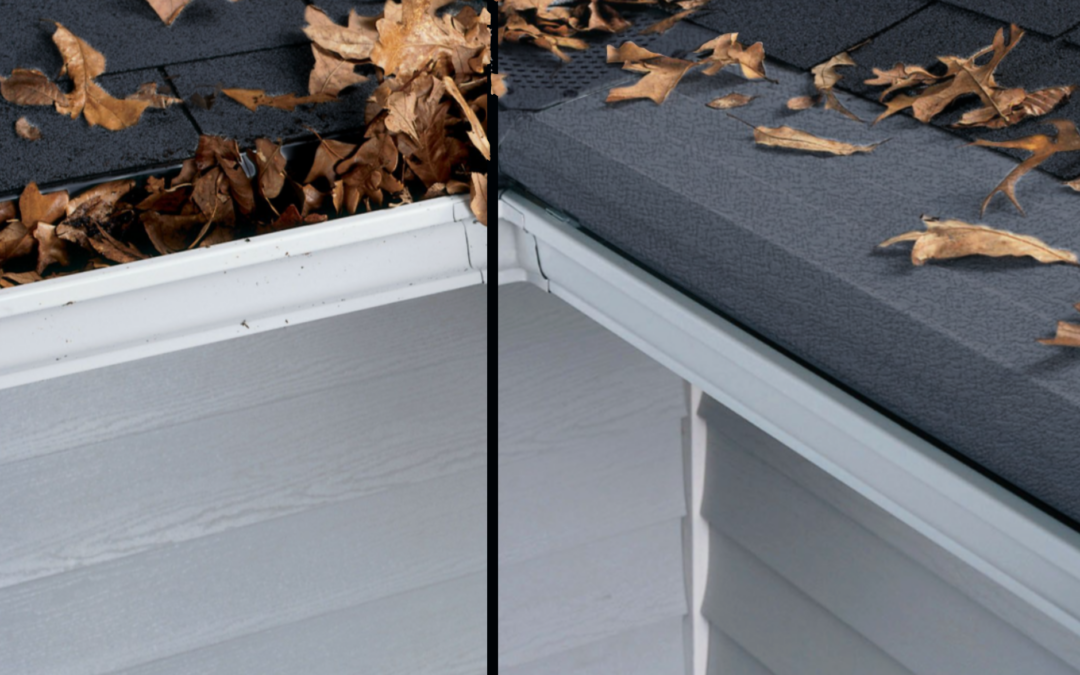
Eclipse Roofing & Restoration is the exclusive Gutter Helmet dealer in the Kentuckiana region. Gutter Helmet uses a patented nose-forward design that allows water to flow into the gutter while deflecting leaves, twigs, and debris over the edge. The system is engineered to handle up to 22 inches of rainfall per hour—well above anything Louisville weather typically produces.
Gutter guards make the most sense for homeowners who:
- Have significant tree coverage over or near the roofline
- Want to eliminate seasonal gutter cleaning
- Have had water intrusion or foundation issues tied to gutter overflow
- Are planning to stay in their home long-term
Eclipse’s Gutter Helmet installation comes with a lifetime warranty, making it a long-term investment rather than a recurring maintenance cost. For homeowners who have already invested in new seamless gutters, adding Gutter Helmet at the same time is often the most cost-effective approach.
Why Are Seamless Gutters Worth Considering for Louisville Homes?
Standard sectional gutters—the kind sold in hardware stores and installed in precut lengths—connect at multiple points along the roofline. Each connection is a potential failure point. Sealants age, joints separate, and leaks develop right at those seams.
Seamless gutters are custom-fabricated on-site to match the exact dimensions of your home, with no mid-run joints. The only seams are at corners and downspout connections. This design dramatically reduces leak risk and extends the lifespan of the system.
Eclipse Roofing & Restoration fabricates seamless gutters in 5-inch and 6-inch aluminum profiles, as well as copper options in half-round and K-style. Aluminum is the practical choice for most Louisville homes—lightweight, rust-resistant, and available in a range of colors to match any exterior. Copper is a premium option that develops a natural patina over time and can last 50 years or more with minimal maintenance.
Don’t Wait Until Fall—Schedule Your Gutter Inspection Now
August is the right time to catch problems while conditions still favor fast, affordable repairs. Once fall arrives, you’re racing the calendar. Once winter hits, you’re managing damage.
Eclipse Roofing & Restoration has served Louisville and the Kentuckiana region for over 25 years, with more than 400 Google reviews and an A+ BBB rating. The team handles everything from minor gutter repairs to full seamless gutter replacement and Gutter Helmet installation.
Call Eclipse Roofing & Restoration at 502-266-7510 or schedule your inspection online at eclipseroofinglouisville.com. Get your gutters evaluated before the season changes—and before a small problem becomes a big one.
Frequently Asked Questions About Gutter Inspection in Louisville
How often should Louisville homeowners inspect their gutters?
Most gutter professionals recommend inspecting gutters at least twice a year—once in late spring after pollen and storm season, and once in late summer before fall leaf drop. Louisville’s climate, with its heavy spring rains and intense summer storms, makes the August inspection especially important for catching damage before conditions worsen.
How long do aluminum gutters typically last in Louisville?
Properly installed seamless aluminum gutters typically last 20 to 30 years in Louisville’s climate. Sectional aluminum gutters with multiple joints tend to fail sooner, often within 10 to 15 years, due to joint separation and leakage. Copper gutters can last 50 years or more.
Is Gutter Helmet worth the investment for a Louisville home?
Gutter Helmet is worth considering for Louisville homeowners with significant tree cover, recurring clog problems, or a history of water damage tied to gutter overflow. Eclipse Roofing & Restoration, the exclusive Gutter Helmet dealer in the Kentuckiana region, installs the system with a lifetime warranty, which reduces long-term maintenance costs significantly.
What’s the difference between 5-inch and 6-inch seamless gutters?
The difference is water-handling capacity. Standard 5-inch gutters work well for most homes, but larger roofs with steep pitches or wide spans generate more runoff than a 5-inch system can handle efficiently. Eclipse Roofing & Restoration offers both sizes and can recommend the right profile based on your roof’s square footage and pitch.
Can I repair gutters myself, or should I hire a professional in Louisville?
Minor issues like resealing a leaking joint can be DIY-managed if you’re comfortable on a ladder and the damage is isolated. However, sagging gutters, fascia rot, systemic leaks, or any work involving gutter replacement are best handled by a licensed contractor. Improper installation affects drainage slope and can cause the same overflow problems the repair was meant to fix.