Quick answer: Wind damage typically appears suddenly after a storm and shows up as missing shingles, exposed nail heads, or lifted edges in isolated areas. Aging roof damage develops gradually over years and appears as curling shingles, granule loss across the entire roof, and cracking that’s spread evenly rather than concentrated in one spot. Knowing which one you’re dealing with matters because insurance typically covers storm damage but not normal wear and tear.
If you’ve noticed a shingle out of place or a soft spot forming on your roof, your first question is probably: did a storm cause this, or is my roof just getting old? For Louisville homeowners, this isn’t just a curiosity question. The answer determines whether your homeowner’s insurance policy is likely to cover the repair, and it shapes how quickly you need to act.
Louisville sees its fair share of severe weather, from spring thunderstorms to the occasional derecho barreling through the Ohio Valley. At the same time, most residential roofs are only built to last a couple of decades before they need replacing. That overlap makes it easy to confuse one problem for the other. Below, we’ll break down exactly what separates wind damage from aging, how each one shows up on your roof, and what to do once you’ve identified the culprit.
What does wind damage to a roof actually look like?
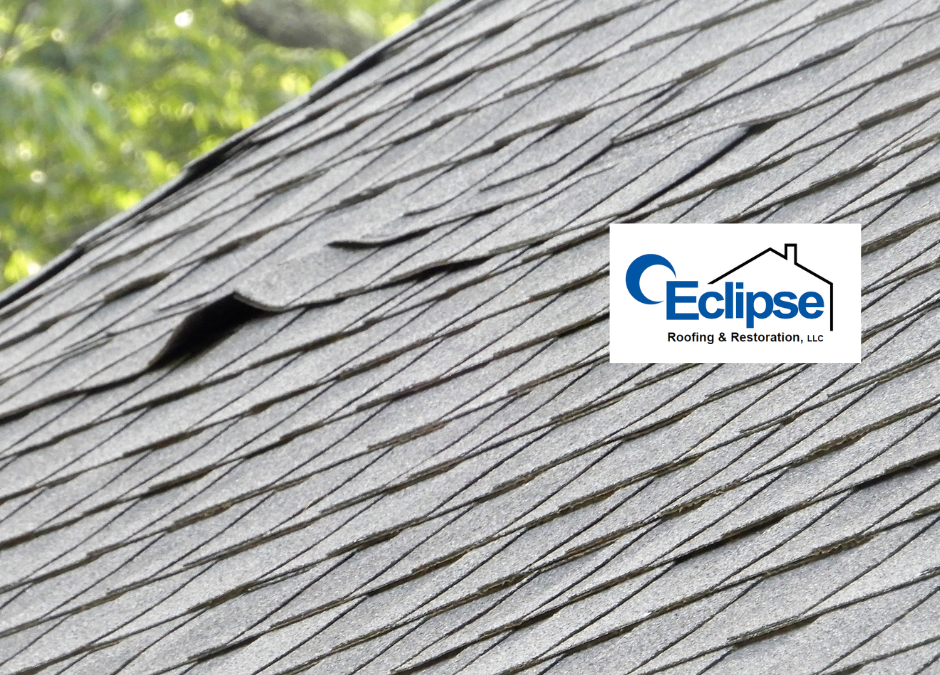
Wind damage tends to be sudden, localized, and directional. High winds lift shingles from one edge, and depending on the strength of the gust, they either flatten back down, crack, tear off completely, or fold backward against the grain.
Here’s what to look for after a windstorm:
- Missing shingles or bald spots on the roof, especially near ridges, edges, and corners where wind pressure is strongest
- Lifted or creased shingles that no longer lie flat against the roof deck
- Exposed nail heads where a shingle has shifted out of place
- Granules collecting in gutters or at the base of downspouts, especially right after a storm
- Debris on the roof, such as tree limbs, which can indicate the storm was strong enough to cause structural damage
One clue that separates wind damage from aging is the pattern. Wind damage often affects one section of the roof, usually the side facing the direction the storm came from, rather than being spread evenly across the whole surface.
How does normal aging show up on a roof over time?
Aging roof damage tells a different story. It’s slow, even, and shows up gradually rather than overnight. Asphalt shingles are designed to last for a set number of years, and as they approach the end of that lifespan, they lose the oils and materials that keep them flexible and protective.
Signs your roof is aging rather than storm-damaged include:
- Curling or cupping shingles, where the edges turn upward or the center bows
- Widespread granule loss, giving the roof a bald, uneven appearance across large sections rather than one localized area
- Cracking shingles, particularly in areas with heavy sun exposure
- Dark streaks or algae growth, which often appear as a roof ages and loses its protective coating
- Sagging areas, which can indicate the roof deck underneath has weakened over time
Unlike wind damage, aging affects the entire roof at a similar rate since every shingle was installed and exposed to the elements at the same time. If you’re noticing wear across your whole roof rather than in one specific spot, you’re likely looking at age rather than storm impact.
Can wind damage and aging happen on the same roof at once?
Yes, and this is where it gets tricky for homeowners. An aging roof is more vulnerable to wind damage because the shingles have already lost some of their flexibility and sealant strength. A storm that a newer roof would shrug off might tear shingles right off an older one.
This means a single wind event can accelerate problems that were already brewing. If your roof was already 18 years into a 20-year lifespan, a strong wind event might be the tipping point that pushes it toward failure. This is a common reason homeowners are told, after a storm, that their whole roof needs replacing rather than a simple patch job.
Why does it matter whether your roof damage is from wind or age?
The distinction matters most when it comes to your wallet. Most homeowner’s insurance policies cover sudden, storm-related damage, but they don’t cover deterioration from normal wear and tear. If an insurance adjuster determines your roof failed because it was old rather than because of a specific storm, you could be left covering the repair cost yourself.
This is why documentation matters. If a storm rolls through Louisville and you suspect damage, note the date, check for matching damage on neighboring homes, and get an inspection as soon as possible. The closer the inspection happens to the storm date, the easier it is to establish a clear connection between the weather event and the damage on your roof.
What should you do if you’re not sure which one you’re dealing with?
Honestly, most homeowners can’t tell the difference from the ground, and that’s not a knock on you. Roof damage often requires a closer look than binoculars or a quick glance from the yard can provide. That’s where a professional inspection comes in.
At Eclipse Roofing & Restoration, we’ve spent over 25 years inspecting roofs across the Louisville area, and we know exactly what separates storm damage from ordinary aging. Our team will walk your roof, document what we find with photos, and give you a straightforward explanation of what’s going on and what your options are. If storm damage is present, we can also help guide you through the insurance claims process.
Protect your Louisville home with a professional roof inspection
Whether your roof took a hit in the last storm or has simply reached the end of its natural lifespan, the smartest move is getting a professional set of eyes on it before small issues turn into bigger, more expensive ones. Waiting too long after a storm can also make it harder to prove the damage was weather-related when it comes time to file an insurance claim.
Eclipse Roofing & Restoration has served Louisville, KY, and the surrounding areas for over 25 years, offering roof inspections, repairs, and full replacements backed by quality materials and workmanship. If you’re noticing signs of damage or simply want peace of mind, schedule an inspection with our team today.
Frequently asked questions
Does homeowner’s insurance cover wind damage to a roof?
Most homeowner’s insurance policies cover sudden wind damage, though coverage details vary by provider and policy. It’s best to review your specific policy or speak with your insurance agent to confirm what’s covered.
How long does a typical asphalt shingle roof last?
Asphalt shingle roofs generally last between 15 and 25 years, depending on the quality of materials, installation, and local weather conditions.
Can I repair just the wind-damaged section of my roof, or do I need a full replacement?
If the damage is limited to a small, isolated area and the rest of the roof is in good condition, a targeted repair is often possible. If the roof is already aging or the damage is widespread, a full replacement may be more cost-effective long term.
How soon after a storm should I get my roof inspected?
It’s best to schedule an inspection as soon as possible after a storm, ideally within a few days. This helps establish a clear timeline for insurance purposes and prevents minor damage from worsening due to exposure.
Who should I call for a roof inspection in Louisville?
Eclipse Roofing & Restoration serves Louisville, KY, and surrounding areas including Jeffersontown, St. Matthews, Middletown, and Oldham County, providing professional roof inspections and repair services.